

Hi, I'm Miles.
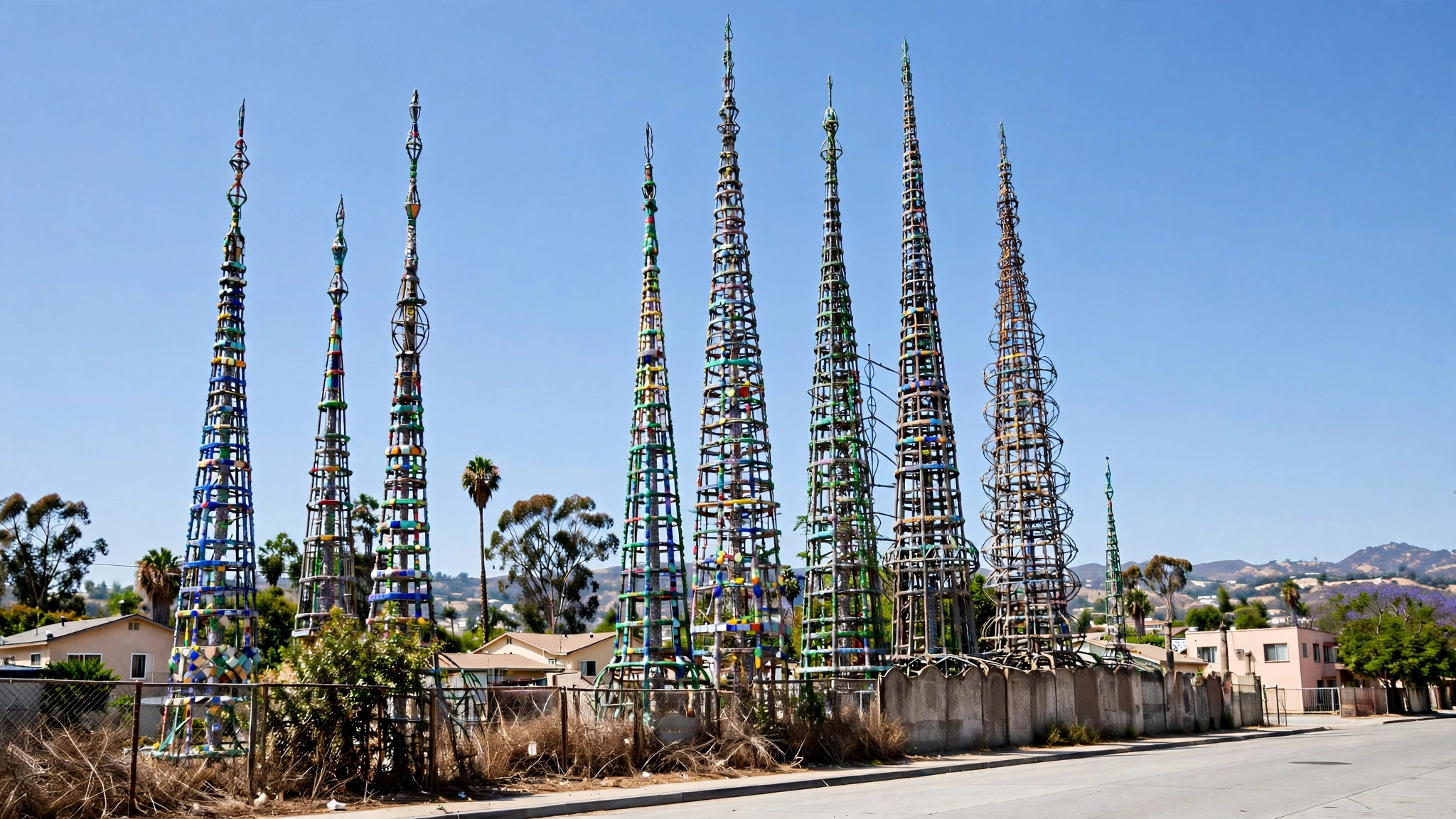
I came to Watts with a camera and no real plan, which is the wrong way to come here. The Towers don't reward a quick look. They reward standing still.
Simon Rodia — Sabato Rodia, an Italian immigrant tile setter — built all of this by hand between 1921 and 1954: seventeen towers and walls of steel, concrete, broken tile, green glass, and seashells. The tallest is just under a hundred feet. There was no crew, no blueprint, no funding. He worked after his day job, for thirty-three years, and then he walked away. The city tried to tear them down in 1959. The towers didn't move.
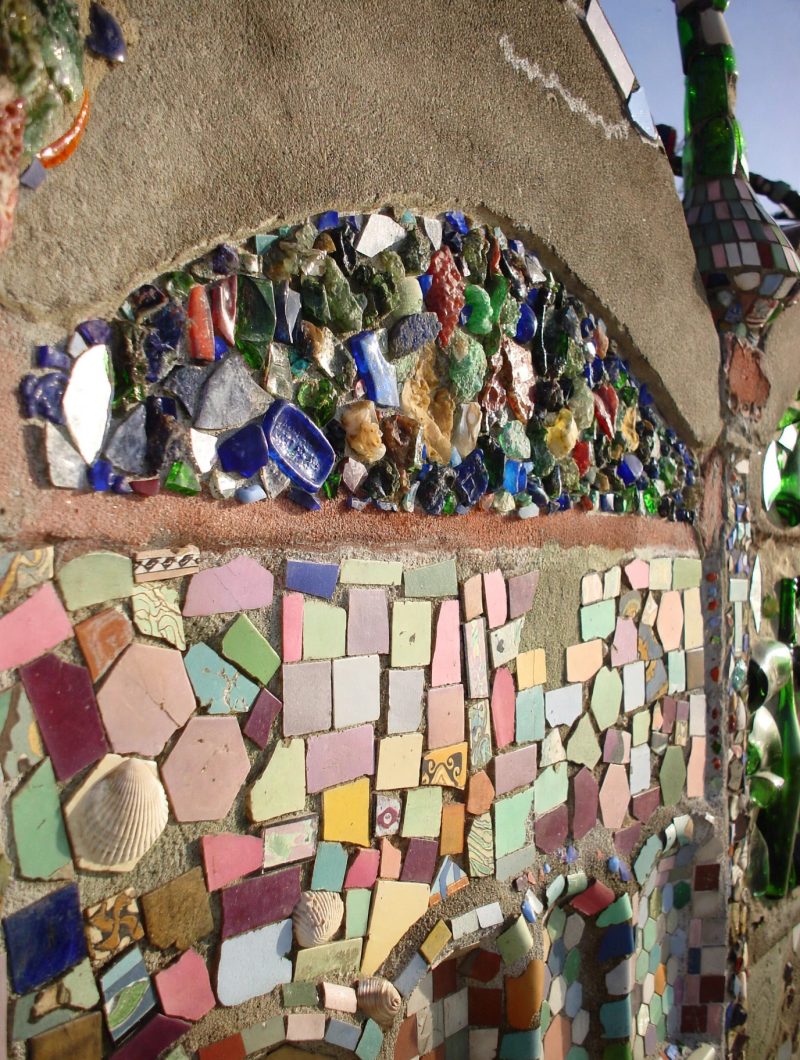
Broken tile, green glass, and seashells, up close.
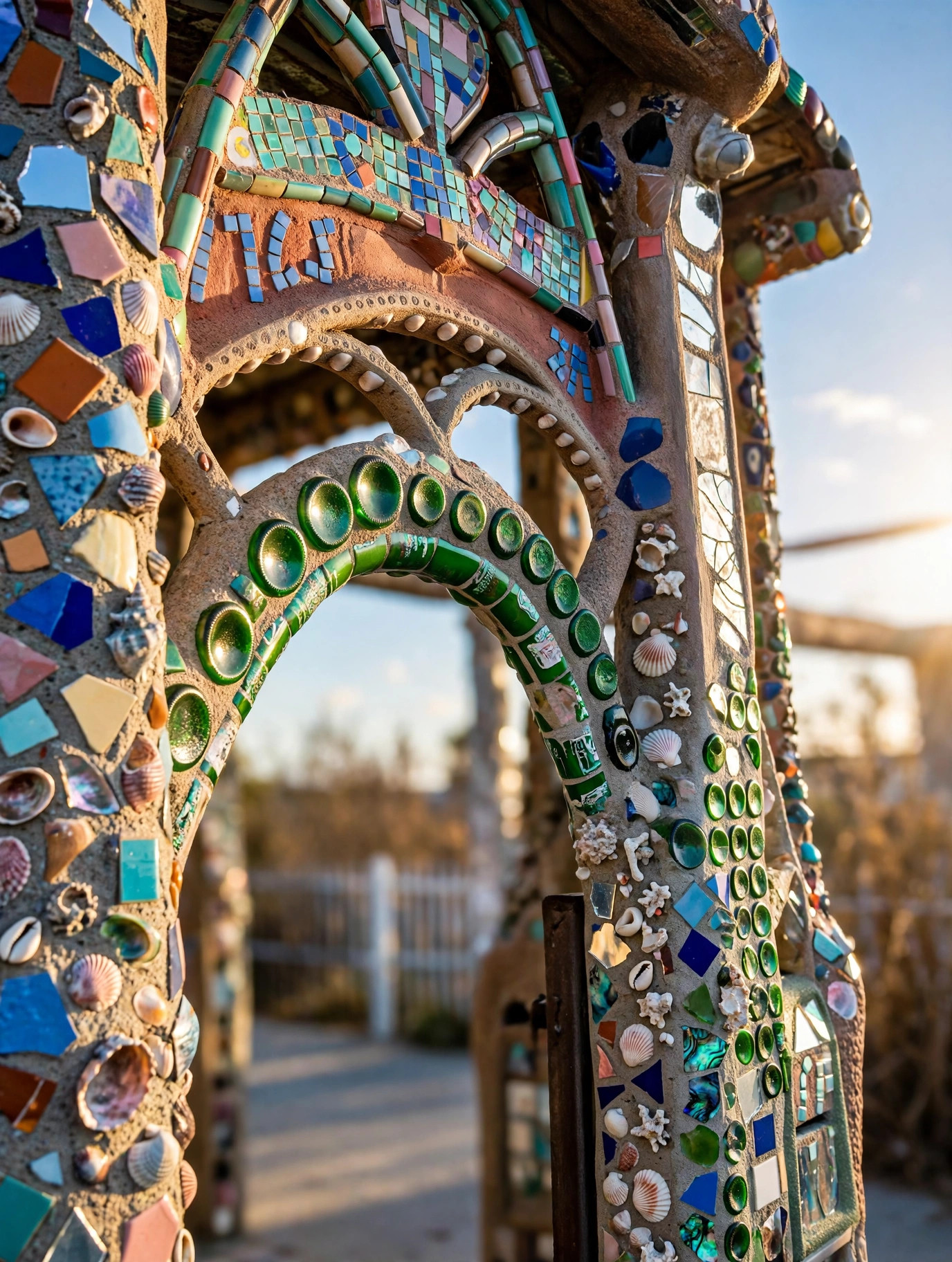
A mosaic doorway, with Rodia's initials in tile.
You can see the Towers from the street for free, any time. To go inside the gates you take the guided tour — about thirty minutes, $7 for adults, and worth every dollar, because the details only make sense up close: the 7-Up bottles in the green glass, the hearts Rodia hid everywhere, his initials in tile over a doorway. The tour runs Thursday through Saturday and on Sunday afternoons; the Arts Center next door is free.
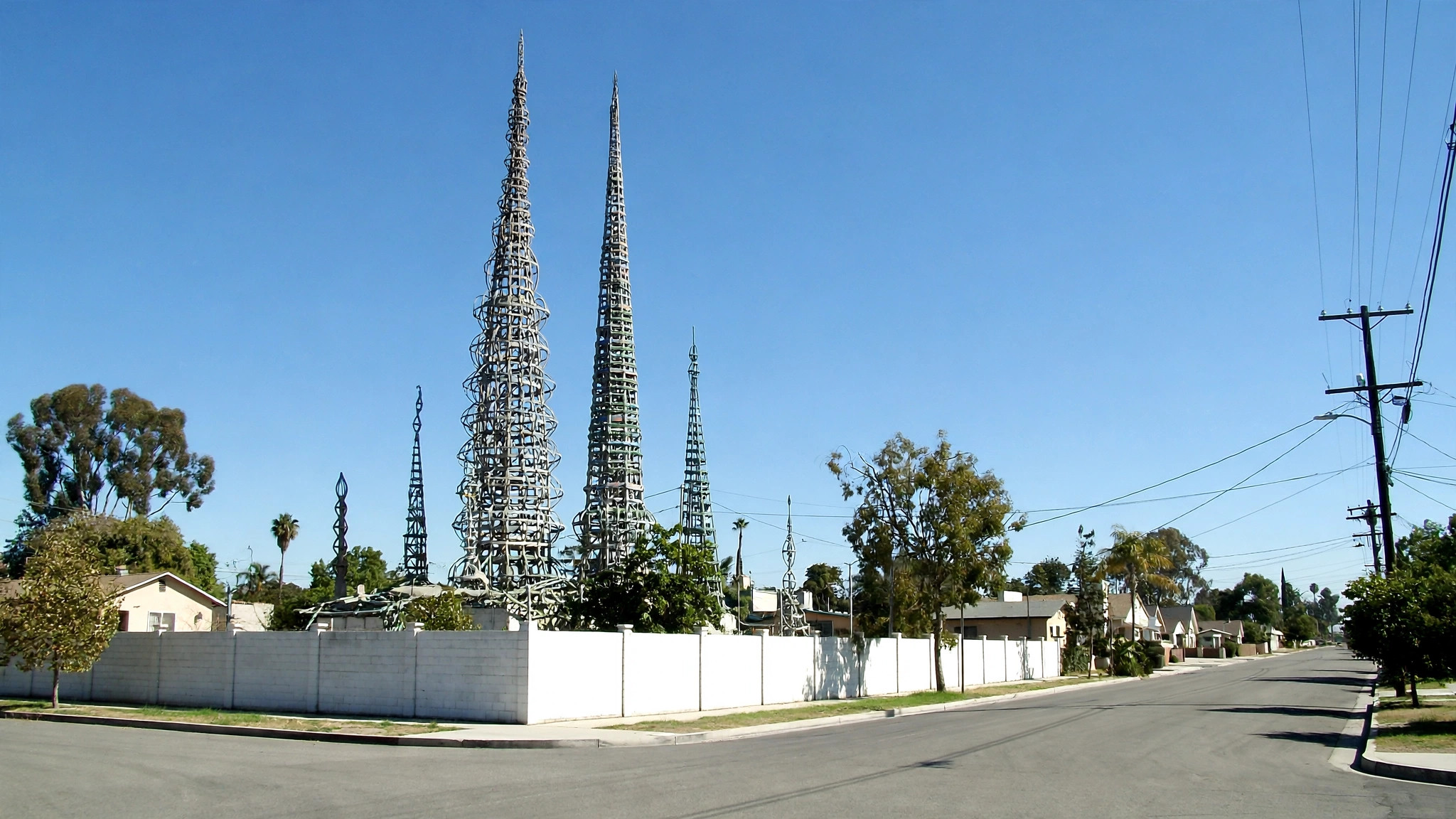
The towers from the street.
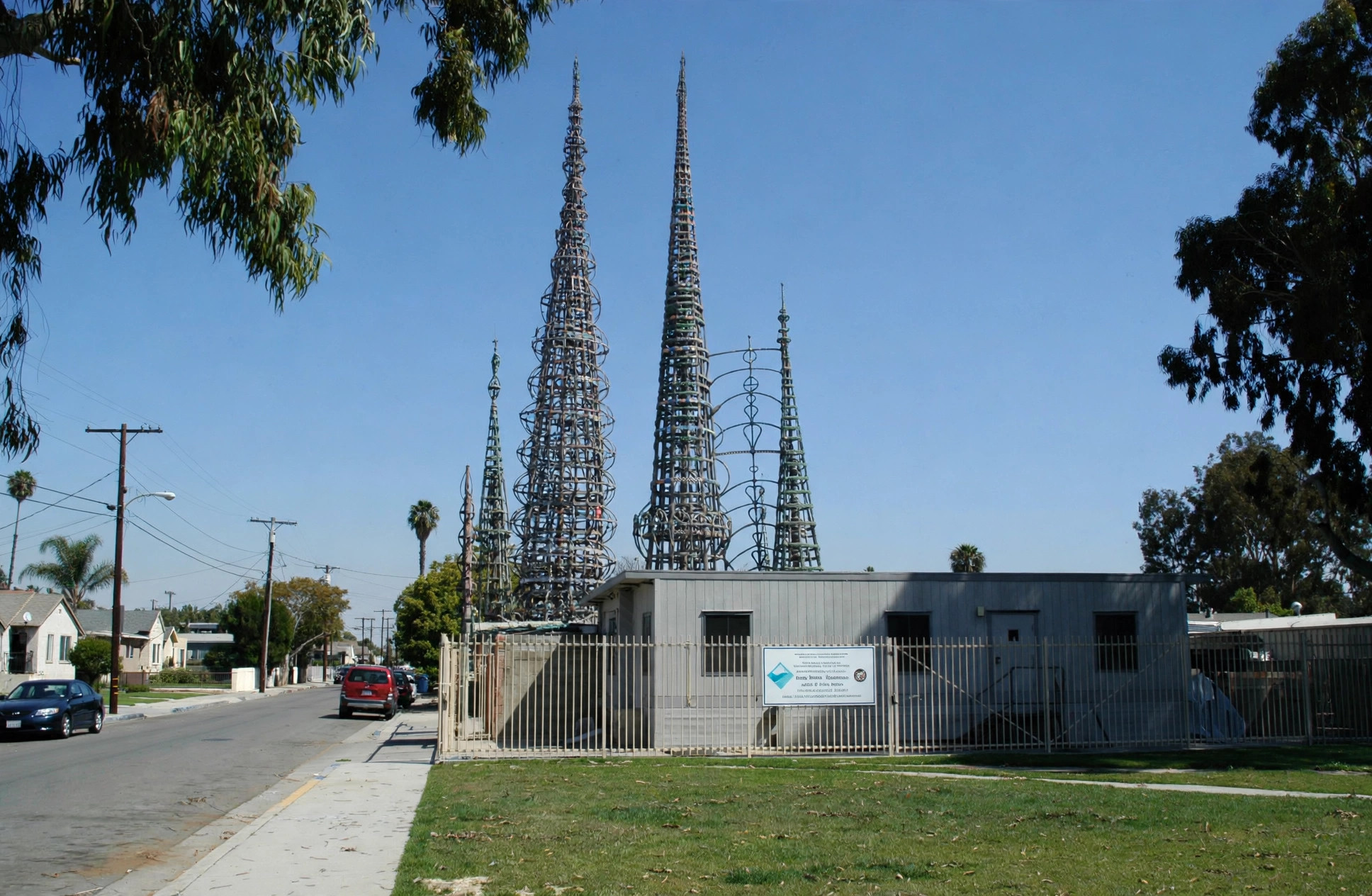
The towers behind the Arts Center.
Good to know: Tours Thu–Sat 10:30am–3:30pm, Sun 12:30–3:30pm, about 30 minutes, $7 adults / $3 kids and seniors. The Arts Center next door is free. Take the Metro A line to 103rd St / Watts Towers. wattstowers.org.
I left with a full roll of film and the same thought I always have here: one person, working alone, can leave something the whole city has to walk around.
— Miles Rowan, for June & Aurora